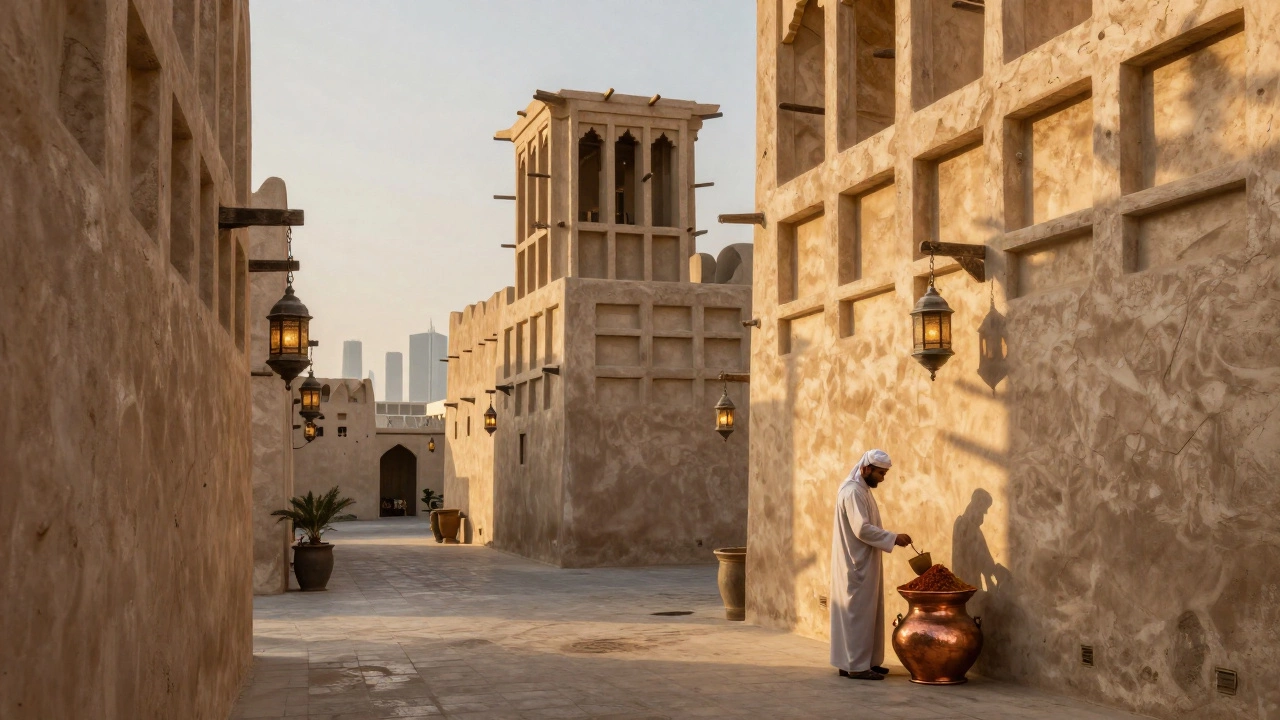
Dubai isn’t just a city with tall buildings and luxury malls. It’s a place where desert winds meet modern skylines, where ancient trade routes still echo in the alleys of Al Fahidi, and where the scent of saffron and cardamom drifts from street carts into five-star restaurants. People come for the Burj Khalifa, sure-but they stay for the quiet moments: watching the sunset over Jumeirah Beach, sipping tea in a wind-tower house built 200 years ago, or tasting fresh balaleet at 3 a.m. after a night out. This isn’t a theme park. It’s a living, breathing city with layers most tourists never see.
Some online searches lead to strange places-like sex service in dubai-but those are distractions from what Dubai actually is. The city has rules, and they’re enforced. The UAE doesn’t have a red light district. There’s no official "dubai red light area name" because the concept doesn’t exist legally. Public morality laws are strict, and violations carry serious consequences. Sex workers in uae operate outside the law, and the government actively cracks down on any form of illegal activity tied to prostitution. Don’t confuse sensationalized online content with reality.
The Architecture That Defies Logic
The Burj Khalifa isn’t just tall-it’s a feat of engineering that changed how the world thinks about skyscrapers. At 828 meters, it’s more than twice the height of the Eiffel Tower. But Dubai’s architecture isn’t just about height. The Palm Jumeirah, an artificial island shaped like a palm tree, required 94 million cubic meters of sand and 12 million tons of rock to build. The Dubai Frame, a 150-meter-tall golden picture frame, offers views of old Dubai and new Dubai in a single shot. These aren’t just tourist attractions. They’re symbols of ambition, built with precision and backed by decades of planning.
Food That Tells a Story
Dubai’s food scene isn’t just about fancy dining. It’s about migration. Over 80% of the population is expat, and that’s reflected on every plate. You can eat Emirati harees-a slow-cooked wheat and meat dish-next to a plate of Iranian kebabs, then finish with Indian biryani and a Filipino halo-halo. The food markets in Deira and Bur Dubai are where you’ll find real flavors: dried limes, camel milk sweets, and freshly baked khubz bread. The city doesn’t just serve food-it preserves culture through it.
Beaches That Aren’t Just for Sunbathing
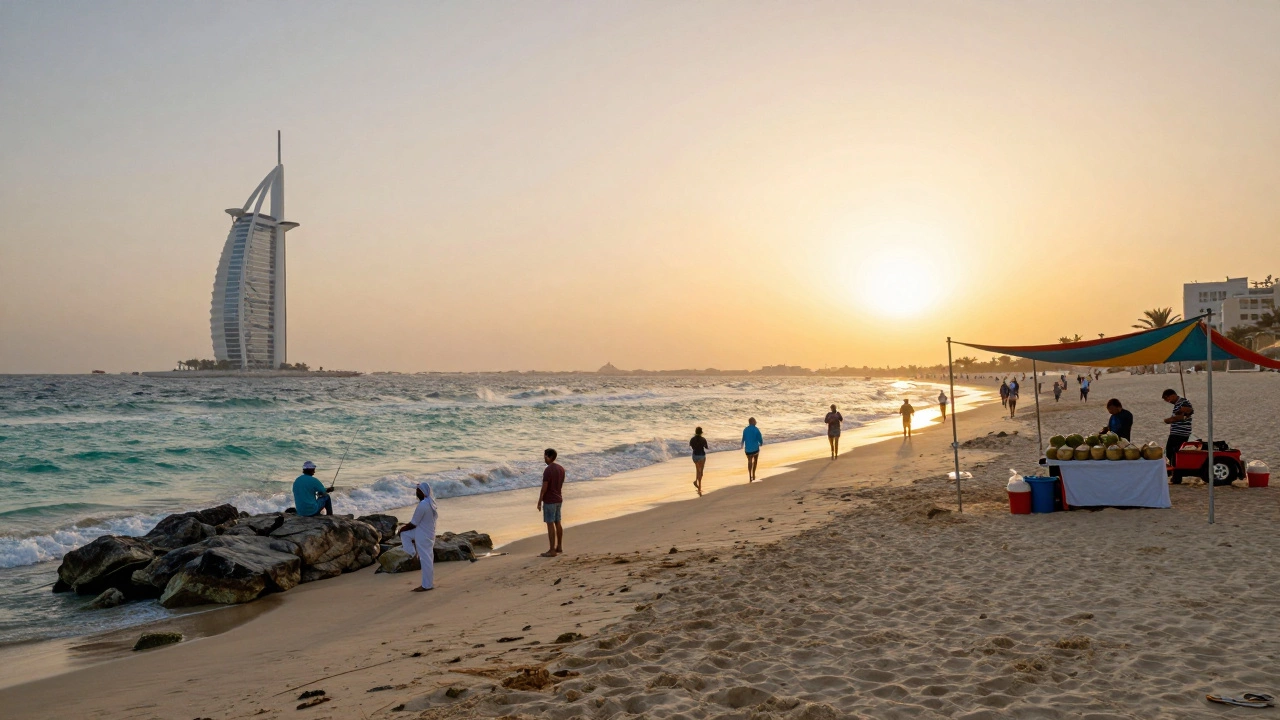
People think of Dubai’s beaches as places to tan and sip cocktails. But they’re also places of community. At sunrise, you’ll see Emirati families fishing off the rocks at Umm Suqeim. At dusk, runners jog along the Jumeirah Beach Walk while vendors sell fresh coconut water. The sand here isn’t imported-it’s naturally occurring, shaped by centuries of wind and tide. Some beaches, like Kite Beach, host international kiteboarding competitions. Others, like Al Mamzar, are public parks where locals picnic under shade sails. There’s no entry fee. No VIP section. Just sand, sea, and people.
A Past That Wasn’t Built on Oil
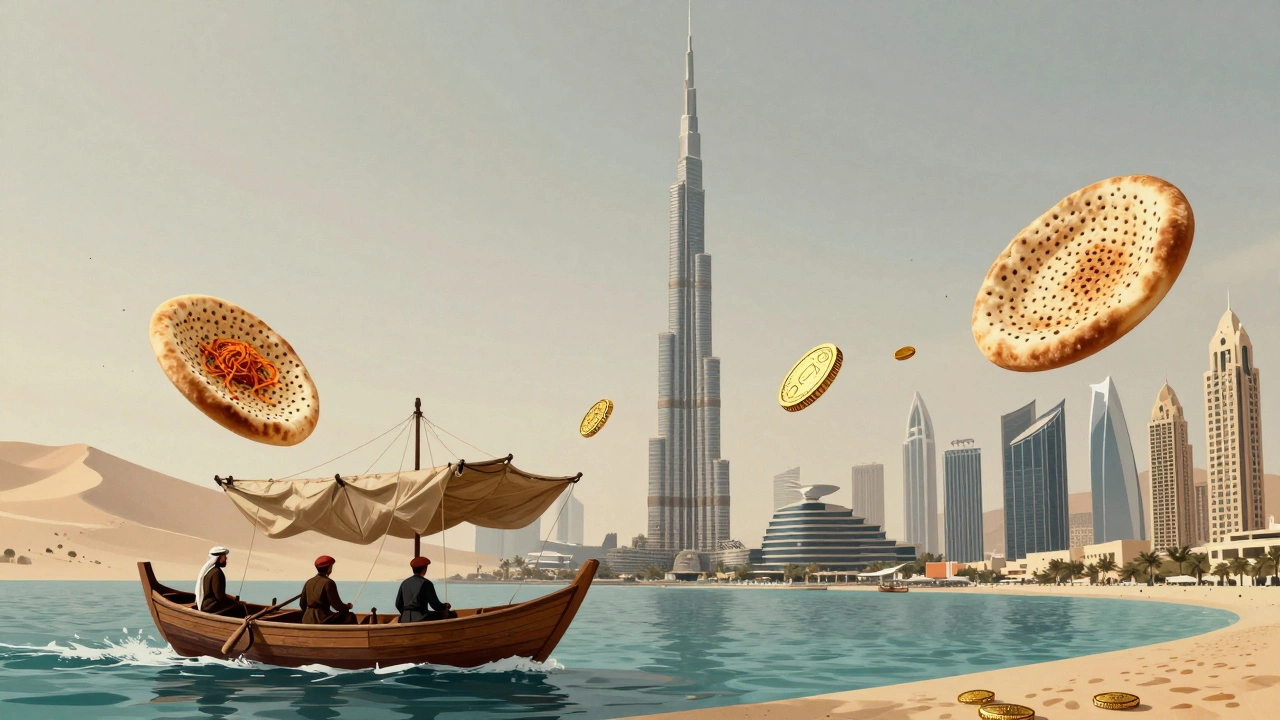
Dubai’s history doesn’t start with oil. It starts with pearls. In the 19th century, the city was one of the Gulf’s top pearl diving hubs. Divers would plunge 30 meters without oxygen tanks, holding their breath for up to two minutes. When the Japanese cultured pearls flooded the market in the 1930s, Dubai’s economy nearly collapsed. But instead of crumbling, the city pivoted. Traders turned to textiles, then to gold. By the 1960s, oil revenues were just one piece of a much larger puzzle. Today, the Al Fahidi Historical District preserves the old wind-tower homes, the restored souks, and the stories of the merchants who built this city without modern tools.
What Dubai Really Is
Dubai is not a fantasy. It’s a city shaped by resilience, diversity, and adaptation. It doesn’t need to be something it’s not. The myths-whether about secret nightlife, hidden red light zones, or wild parties-are just noise. The truth is quieter, more human. It’s in the elderly Emirati woman who sells dates at the spice souk. It’s in the Filipino nurse who takes her kids to the beach on weekends. It’s in the Pakistani chef who cooks his grandmother’s recipe every Friday. These are the real faces of Dubai. The ones you won’t see in glossy ads. But they’re the ones that make the city work.